An Interview with Noll Griffin

On Trying to Cure What We Shouldnโ€™t Have Caused

Remedies

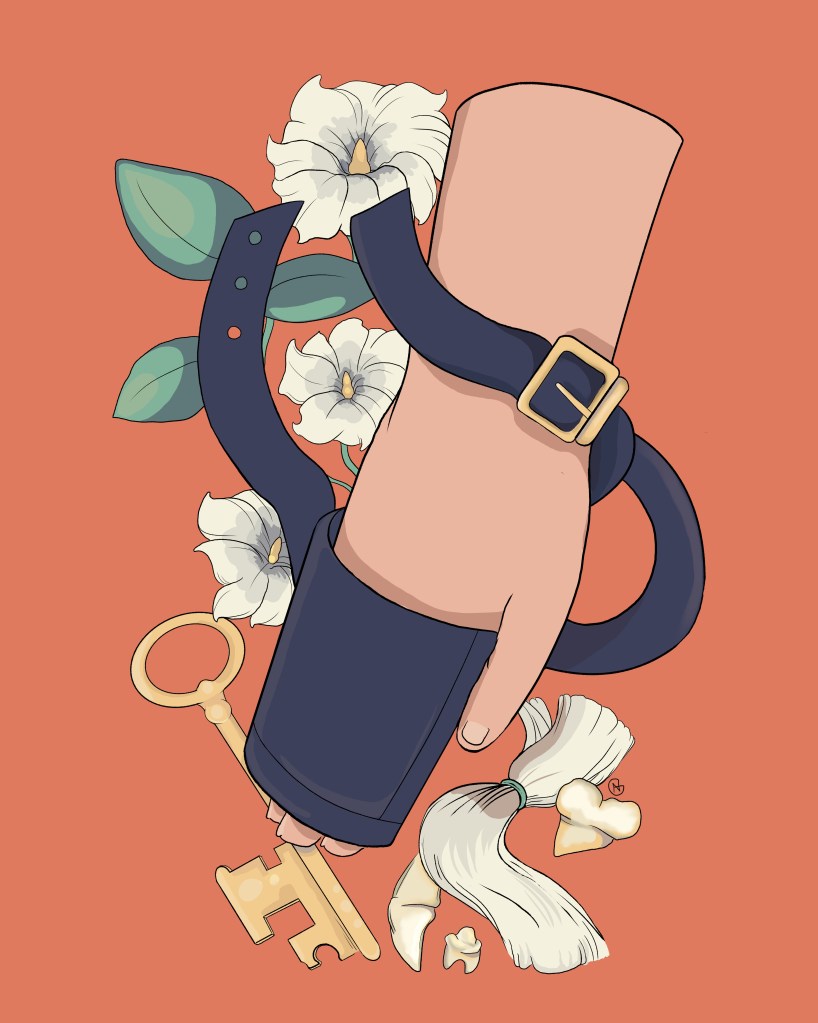
EB: Before I get into my questions about the subject matter of this piece, I’d love to hear about the medium and what you used to create this work of art!

NG: I did this one entirely in Krita, which is my favorite program to use for digital art, with my trusty Wacom tablet.

EB: You let us know this piece was done while listening to an audiobook about rabies throughout history–how did that specific influence inspire this piece, and what elements are directly connected to that podcast?

NG: While listening to the timeline of how this disease kept popping up through time under different names but similar circumstances, I wanted to illustrate the stubborn push and pull of fear and familiarity in humansโ€™ relationship with animals as they try to escape our sprawl or adapt to us, and the stubborn limits in our compassion for them. That is, we as a group may often roll full steam ahead in throwing up buildings right in the middle of where a bunch of bats are known to roost, but if we see a cute bat on the ground, itโ€™s impossible for many of us individually not to try and help it even knowing it might be contagious. This is the reason for the muzzled hand in the center, an attempt to keep oneโ€™s self from both harming nature and being harmed by it in turn, as well as a nod to the aggression part of rabies which was described in anxiety-inducing detail through various historical accounts read in the audiobook.

EB: What drew you specifically to visually representing these remedies?

NG: Most of the remedies I depicted, like most of the attempted rabies remedies in history in general, revolve around interacting directly with the source of danger (Hair of the dog that bit you, etc.) or a different source of danger in nature like the poisonous datura flowers in this piece. I thought these would make a good symbol for the things we are willing to try, and not willing to try, to avoid zoonotic diseases.

EB: Aside from podcasts, where else do you look for inspiration?

NG: I get inspiration from vintage greeting cards, Wikipediaโ€™s random article feature, nature guidebooks, my dream journal, weird flea market finds, and long-abandoned paranormal message boards.


Noll Griffin is a digital illustrator and linoleum printmaker living in Berlin, Germany. His work takes inspiration from the oddities of nature and nostalgia from a queer lens. He is also an occasional singer-songwriter with a few bedroom-recorded albums to his name floating around. You can find more from him on Twitter (@nollthere) or Instagram (@nollprints).


This interview was conducted by Ellery Beck, one of the co-editors of Beaver Magazine.

A Review by Saturn Browne

The New Wild West: An Exploration into Queer Adolescence

In a galaxy of words, Tommy Blake throws out his lasso and captures the reader with his whimsical pieces in his new chapbook. Published by Bottlecap Press, space cowboy on a little, uh, space exploration? is Blakeโ€™s journey adventuring into the wild west of queerness and identity. Blakeโ€™s opening poem, โ€œletโ€™s wrangle the moon?โ€ sets the mood for a wild west reimagined:

โ€œtides vomit all over me, giddy with lumps of sea
greasing the crease of my lips.โ€

Blakeโ€™s poems trap the reader in their vivid descriptions and just subtle enough queerness. There is a sense of fantasy within their words, creating a scenario so realistic yet dreamlike. Instead of reeling the viewers back into reality, though, they leave the endings open & up to the imagination. In space cowboy on a little, uh, space exploration? every word becomes an image, a symbol for the final frontiers.

โ€œcan i get a yeehaw every time i rake in water wrinkles,
or is it too cringy to chase weird objects

in the skyโ€™s reflection?โ€

In โ€˜looking at the tragic reflectionโ€™ Blake continues with their imagery, even starting with a line from the acclaimed film Pearl, directed by Ti West:

iโ€™m a star, please, iโ€™m a star
blearyfrothing at the mouth.

And later on:

โ€œmy voice ringing red, so red
like an iris cut from the socket,โ€

In โ€œthe return of saturn, or shaking a magic eight ball,โ€ Blake continues their beautiful imagery and simile. With lines such as:

โ€œmaybe this isnโ€™t what i mean by new frontiers.
not when everything is foreseen as a threat

in clarity teased out in blue: signs point to yesโ€

Blake addresses the teenage emotions of confusion so well as they project themselves as a cowboy in a new world, feeling as much as a teenager does in the world of adulthood. Itโ€™s important to look at Blakeโ€™s writing process in terms of how they formulated their pieces. In the โ€˜notes/acknowledgmentsโ€™ section, Blake refers to his processโ€” one in which โ€œ[he] looked to an older and unpublished body of work from my teen yearsโ€ฆ[they] gathered overall vibesโ€ฆ to reimagine [their] queer experiences in a late teens/early 20s light.โ€ The way in which Blake re-approaches his teenage emotions with the experience from his adulthood makes for a fascinating mix of angst and love.

Blakeโ€™s last poem in the collection is also of note, specifically the ending of the poem. Leaving the reader with much to ponder, Blake writes in their ending sentence:

โ€œplease, take me
as you will.โ€

Blakeโ€™s mastery of writing and appeals to emotion is like no other. After reading the final line, I found myself pondering about life and love and how I could experience it better. All in all, Blakeโ€™s chapbook is filled with themes of fantasy and growth. Through the dreamlike imagery, Blake is able to uncover a way to communicate to the reader queer love, life, and adolescent nostalgia. Any reader would be lucky to experience this book.

Purchase a copy here!

A Review by Terin Weinberg

~getting away with everythingโ€”a collaboration to carry you far, far away

As the new year rolls around, you may be thinking about what books you can purchase to help you achieve those newfound resolutionsโ€”but after the past few years of what weโ€™ve all endured, I urge you to reach for a poetry collection adamant on lamenting the damage of the past. ~getting away with everything is a shuffled around correspondence between two talented poets: Vincent A. Cellucci & Christopher Shipman. The collection mirrors an open dialogue among the two writers, that functions like a stream of consciousness, but hereโ€™s the wonderful kicker, itโ€™s out of chronology. There are times where youโ€™re certain you know which voice is speaking, but you quickly realize the purpose of this book isnโ€™t to find out which part of the puzzle you are looking at (or hearing from), but that the meshed conversation is the soul of the collection.

~getting away with everything is an honest recollection of remembering where you came from through fragments of memory, while also looking to the future you may face. The opening poemโ€™s title: โ€œSolastalgiaโ€ translates from Latin as a description of the distresses faced by human emotion and existentialism due to environmental change. Both poets in conversation suffered losses attached to Hurricane Katrina, COVID-19, ecological erosion, and every small daily loss one can endure. This collection speaks to their reader by saying, โ€œletโ€™s tell a storyโ€”/every story of home…โ€ (24). This is a poetry collection coveted by place, moving on, moving around, but always spending time looking back in the rearview with โ€œall our exhausted ghosts in tow/pretending to be innocent shadowsโ€ (27). This is a poetry collection about survival and living through homesickness, while finding new places to be grounded, to be human.

Shipman & Cellucci carefully craft their poems to echo the one previous. Every new title emerging on the page carries the ghost of the last poem. They eloquently honor death and the processing of grief through showing how humans โ€œurchin behind/with our little human spines/and bottom-feeding/mouths fossilizing doubt/begetting/all these fragile everythingsโ€ (43). This isnโ€™t a collection about loss, but a conversation to those losses. Each new poem eats and carries the grief and the new surroundings of the next poem. Each poem is a form of a getaway for the last.

Though the idea of escaping is vast in this book, both poets admit the phrase: โ€œI am/still/slow/in/the/process/of/disappearingโ€ (75). Thatโ€™s why this book stands on two feet and runs across the span of 240 pages. Each page is a remembrance of how surviving death makes it hard to actively disintegrate and leave no trace. These poems proudly demonstrate that โ€œevery getaway leads to another getawayโ€ (55). Shipman & Cellucci remind us that โ€œthe sky is never finished/so nothing isโ€ (239). When this book begins its disappearing act on the final page, the open punctuation of the final poem feels like a pull on your coat to go back to the first poemโ€™s getaway. I urge you this new year to sit on the metaphorical porch with these poets, their voices, and their acts of remembering things lost to the distance, those still clinging on, and others making their first getaway.


Purchase a copy here!

Jeri Alexander: Art That Invokes Reaction

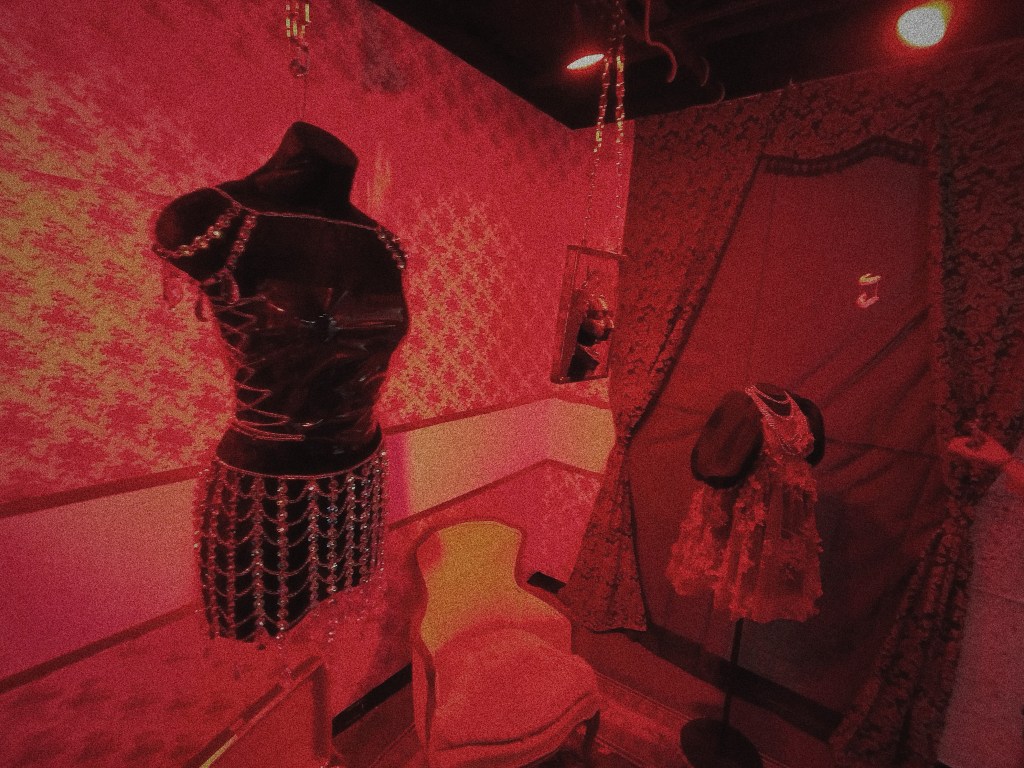
Our website header is a photograph from inside Jeri Alexander’s most recent sculpture installation. This collection was more than just a display of sculptures, it was an experience to be entered and interacted with. All kinds of artists, including writers, spend time considering the connection and conversations that their creations will have with the world. We wanted to share this insight with you into her art and this process, as well as thank her for letting us display this lovely exhibit at the top of our website!

Letโ€™s start with this collection of work specificallyโ€”how did it come to be and what connects it together?

This installation was for my senior installation, I tried to make the room itself art. I wanted to make the room feel creepy, then to layer more and more creepy elements on top until it all came together. Thatโ€™s what I do with a lot of my artโ€”I keep buildingโ€”like, hereโ€™s a weird thing, what would go with that?

What inspires or influences your work?

As far as inspiration I look to other artists who use elements like mine, that same kind of creepyโ€”I scour the internet, find inspiration from artists I like. Not copying but yโ€™know, trying to get a feel. Also, history and fashion has always inspired me for sure. The first example I can think of is 1930โ€™s Weimar cabaret style.

Who do you create your art for?

The freaks man, the weirdos. Cโ€™mon.

When did you start becoming passionate about art? Sculptures? What pushed you towards your mediums?

Straight out the womb dude. Iโ€™ve always been passionate about sculpture, makeup, fashionโ€”any kind of studio, 3-d, tangible art. Iโ€™m interested in making that interactive, reactive work. Thatโ€™s how my brain works, I connect more with things I can feel rather than just ideas or something on a page.  Tangible art feels more real to me, more visceral; it creates a reaction.

Sculpture and other similar arts can often end up feeling inaccessible due to the money and equipment it requires. How have you worked around that, and do you have any advice for artists trying to work with what feels like nothing?

I like to use any medium I can get my hands on; it doesnโ€™t have to be metal or anything expensive. I think adding together a ton of mixed media is much more interesting than sculptures with a single medium. The more things you have the better itโ€™ll look in the end, is my philosophy. I think this installation really shows that. I started in sculpture because there wasnโ€™t a fashion major at my school and 3-d studio art was the closest. I donโ€™t have much advice, still figuring it out myself. Just work with as much as you can get your hands on. Do whatever you wanna do and donโ€™t follow anyone elseโ€™s rules. If someone says donโ€™t do that, you should definitely do it.

Where do you see yourself in the future?

Paris Fashion Week. Or a shipyard. Maybe at the same time.


Jeri is a graduate of Salisbury University. She’s an artist in every sense of the word and is currently working as a visual stylist and as a sculpture studio tech.

A Review by Robin Arble

A Good Book of Poems: Leigh Chadwick’s Your Favorite Poet

โ€œI write a book of poems. I title it Your Favorite Poet. It is a good book of poems,โ€ begins Your Favorite Poet, Leigh Chadwickโ€™s very, very good debut book of poems. If the self-reflexive title and prologue have momentarily dissuaded you from buying this book, I would like to politely grab you by the shirt collar, drag you to the poetry section of your nearest independent book store, open up a copy of Leigh Chadwickโ€™s Your Favorite Poet, and read aloud from literally any page until you realize how desperately you need this book in your life:

โ€œI always wait at least forty-five minutes after therapy before having sex. Every spring I pick up a second job planting pollen in dandelions. On Thursdays I listen to the same Frankie Cosmos song as I follow myself into the afternoon.โ€ (Frankie Cosmos Is a Good Band Name)

โ€œI am born an ostrich in a bomb shelter in some small town in Iowa. Minutes after my birth, a tornado knocks on the shelter door. Hello, the tornado says, I am here to kill who is supposed to be killed.โ€ (Hint of Color)

โ€œI canโ€™t remember the last time we fucked to the silence of alliteration. Minutes turn into miles and miles turn into decades. In ten years, we will be ten years older. Weโ€™ve sharpened our teeth into knives.โ€ (I Delete Every Emotion That Was Never Worth Capitalizing)

The surface persona of Leigh Chadwickโ€™s Your Favorite Poet quickly drops its defenses to reveal a speaker of startling sincerity who, more than anything else, worriesโ€”about her daughter, about her marriage, about her health, about the spreading threat of gun violence in the U.S. โ€œThe road to heaven is lined with bullet casings and leftover pieces of children too slow to duck,โ€ begins the first poem. โ€œLeigh Chadwick moves to a state so red you canโ€™t tell if youโ€™re bleeding,โ€ Leigh Chadwick says later. โ€œI take five pills every morning to forget the definition of feel,โ€ Leigh tells us early on. There is a fierce vulnerability hiding in plain sight in these poems, in โ€œa bed made of smaller beds,โ€ in โ€œthe memory of the night in the bar,โ€ in โ€œkeeping my daughterโ€™s heart my daughterโ€™s heart.โ€ Leigh Chadwick is a poet of remarkable tenderness, as in Deer Poem, the third poem in the collection, which ends, โ€œYour heart threatened nothing but its next beat.โ€ These poems threaten even less: they comfort us with mutual worry.

Leigh Chadwick is a disarmingly relatable poet. Almost every poem in my copy is filled with โ€œyes!โ€s and โ€œawesome!โ€s and โ€œso true!โ€s raining down the margins. I tried my best to read this book in one sitting, but I kept running to my notebook to write down my new favorite line, not knowing every other line would be my new favorite line.  Here are just a few favorite favorites from my notes: โ€œIf you wait long enough, even a cloud will rot.โ€ (Foreplay I.) โ€œRight now is what I miss most about right now.โ€ (What Do People Do When People Do People Things?) โ€œI quit poetry/to write better poetry.โ€ (What Cheer) โ€œI am trying to figure out why some people get to exist and others donโ€™t.โ€ (Bullets Not Included) (Some more marginalia: โ€œlove this attitude!โ€ โ€œtotal non-sequitur!โ€ โ€œthis speaker is so real!โ€โ€”all from the same poem. Any guess would be correct.)

Leigh Chadwickโ€™s imagination never fails her. โ€œI go to bed a Jehovahโ€™s Witness. I dream Armageddon filing its taxes. I dream people climbing out of the dirt and dusting off their cellphones,โ€ begins Mass of Thoughts. The leap between the apocalyptic and the mundane is a thrill to read and reread, and the phonetic echo of the expected โ€œclothesโ€ in the surprise of โ€œcellphonesโ€ keeps me on my toes until the poem ends, startlingly, with a confession: โ€œI start a Daniel Johnston cover band between my hips and cover the pillows with the memory from the afternoon at the lake.โ€ Leigh Chadwick begins a poem with detached irony, moves through concern, and ends by telling you half a secret. I donโ€™t know any other poet besides Leigh Chadwick who writes like Leigh Chadwick and gets away with it.

When you inevitably flip back to the first page of Leigh Chadwickโ€™s Your Favorite Poet the moment you finish it, youโ€™ll be surprised to find out sheโ€™s being modest when she says, โ€œIt is a good book of poems.โ€ Leigh Chadwickโ€™s Your Favorite Poet is, in fact, one of the best Iโ€™ve read all year. You donโ€™t need me tugging at your shirt collar to convince you. Go out and buy this book, this brave and generous abundance.


Buy Your Favorite Poet here!

Leigh Chadwick is the author of the poetry collection Your Favorite Poet (Malarkey Books, 2022), the collaborative poetry collection Too Much Tongue (Autofocus, 2022), co-written with Adrienne Marie Barrios, and Sophomore Slump (Malarkey Books, 2023). Her poetry has appeared in Salamander, Passages North, Identity TheoryThe Indianapolis ReviewPithead Chapel, and CLOVES Literary, among others. She is the executive editor of Redacted Books and is also a regular contributor at Olney Magazine, where she conducts the “Mediocre Conversations” interview series.

Aubade

J’Sun Howard

In response to the prompt “write a poem about being in a graveyard where you find your name on the headstone.”

itโ€™s just like my fatherโ€™s funeral,
except the chrysanthemums litter
themselves everywhere mocking me.
if youโ€™re not crying, you didnโ€™t love him,
was the fire on my ears that shouldโ€™ve burned
her in the pew behind me. praise her god,
i didnโ€™t pursue my pyrotechnic propensity
that still coruscates like mdma in my bloodstream,
like the aries i am. looking at my name,
i know itโ€™s one iโ€™ll never answer to againโ€”
a love iโ€™ll never know who wasnโ€™t loved.
i mean, i don’t think i can or will ever forgive
my father if thatโ€™s what a hero is supposed to do.
i sit next to my headstone & wonder in anime
of the level of mastery of fลซinjutsu it takes
to seal apart of myself outside of myself
knowing still i wonโ€™t be loved. there are more ways
to heal than to have a name that means healing.
like trying to piece these chrysanthemums
back together so they wonโ€™t forget themselves
as they pretend to mourn me in their hymnal silence.
a lost pieris lands atop my headstone & i pray
for me when i repeat my auntie to myself,
if youโ€™re not crying, you didnโ€™t love him.


More prompts for you to ponder! Feel free to send any responses to thebeaversubmissions@gmail.com

  • Write a tritina using the words static, soft, and strange.
  • Write a golden shovel of the line “My body is old but the bones don’t creak in fear.”
  • Write a flash fiction piece about what you think a version of the end of the world might be (and check out this piece for inspiration)!
  • Take a line you’d given up on from an old poem and try to use it as the beginning to a flash prose piece.
  • Write a creative nonfiction piece telling the story of one small, specific place. Whether it be a certain tree you pass walking home, your favorite water fountain on campus, or the water stains in the kitchen from your dogs bowl; let us know how this location came to be.

Jโ€™Sun Howard is a Chicago-based dancemaker and poet. He is a 2018 Bests New Poets nominee. His poetry appears I Canโ€™t Breathe: A Poetic Anthology of Fresh Air, The Matador Review, WusGood, The Shade Journal, Calamus Journal, Birdโ€™s Thumb, and Propter Nos. He is a 2020 Frontier Poetry Digital Chapbook and Button Poetry Chapbook award finalist. He holds an MFA in dance from the University of Michigan. He can be found on Twitter at @jsoleil47 and on Instagram @jsunhoward.

Ellaโ€™s Planโ€”A Concoction of Childlike Curiosities

Written by Ellery Beck, Co-Editor

Buy Ella’s Plan by Jeffrey Bean here!


โ€œEllaโ€™s Planโ€ is best described as a potionโ€”thrown together of everything familiar and found, everything reimaginedโ€”made in your backyard, barehanded. This chapbook, written by Jeffrey Bean and selected for publication by Naomi Shihab Nye, is as she describes it, โ€œthe ultimate alchemy of spirit.โ€ In a reading hosted by The Poetโ€™s Corner, Naomi and Jeffrey discuss this similarity to a childhood creation, a concoction made of outdoor finds (or possibly even kitchen chemicals). I found myself absorbed into Ellaโ€™s potion, her plan; feeling an intimacy with her due to the attentiveness with which she was created. I was transported back to the times I made backyard potions myself, filling wheelbarrows with sticks, pine needles and as much mud as I could scoop. Thereโ€™s a level of care and respect put into articulating this younger point of view, and that consideration results in an intimate conversation with the audience. Jeffrey accomplishes this through the delicate, simple voice Ella carries through each piece as well as through the wondrous, imaginative imagery. These poems embody eventnessโ€”the element of the lyric that pulls you in, that asks you to participate. These poems are all consuming. Itโ€™s hard not to find yourself in Ella.

 This chapbook often finds a way to articulate concepts that often feel impossible to expressโ€”as early as the first poem, Ella is observing โ€œhow light/ so alive it can stop a heart/ courses through wires/ that connect our houses together;โ€. Weโ€™re introduced to the innocent yet incredibly observant persona Ella continues to show us throughout the book, and as early as this poem itโ€™s hard not to find parts of her in your own upbringing. At the end of this poem, Ella becomes a bird, and we feel her urgency to fly away, to find the quiet by the train tracks. Itโ€™s an urgency many writers feel familiar with and this intimate articulation of it is, as Naomi Shihab Nye says, โ€œnothing short of magic.โ€ The language, soft and almost simple, keeps you within the character, back as a child, while the observations and intricate imagery are that of an intentional, craft-minded poet.

There are many moments where the childlike wonder shifts into sobering observations regardless of age. In the poem โ€œTruthsโ€ we are introduced to most solemn (yet most important) piece in this collection. This piece shifts to a more narrative, less imagistic voice; weโ€™re able to not just see but also feel what Ella is experiencing. Reading this piece left me haunted by the gentlest ghost. Even as the babysitter leaves โ€œa bruise/ the shape of a butterfly,โ€ Ella remains โ€œthe puff of pollen in a lilyโ€ and โ€œthe sizzle of bee wings.โ€ Even as we feel the abrupt need to float away with her, these tender images carry us slowly into sky.

It plays on the familiar, the warm memories still floating fuzzy in your head from childhood, the lullabies you halfway remember. It pulls from so many image pools, merging metaphors, collaging each distinct description together; the individual images enhancing the whole. This immense collection of imagery dialogues with itself, each image enriched with the context of the last. Naomi and Jeffrey also discussed the idea that Ella led him to some of the images and ideas that appeared in these pieces; that the creation of this collection itself was an intimate process between the artist and Ella, similar to the interactions that the audience also has her. This collection feels as if it was formed with those poet-to-reader conversations in mind, while also feeling as if Ella led us directly to some of the discussions she wants us to have with the poems and with her. Through this layered creation of Ella, she becomes each of us as a child, while at the same time existing as herself, a singular, distinct being.

Colors are such an integral part of Ellaโ€™s world, and the attention put into this physical chapbook fits so well with this collection. Purple permeates through all these poems more so than other colors, and it feels so fitting that this collection is printed on the prettiest blush pages with dark purple text, wrapped in a stunning aubergine cover with silver ink accenting it. Holding this poem, seeing the art inside of the cover, feels like entering Ellaโ€™s world. The attention to detail goes as far as placing the poems closer to the bottom of the pages, in a similar way to how a child would draw, or how a childrenโ€™s book would situate the words. The designer, Richard Reitz Smith, put the same intimate attention that Jeffrey did into these words making this chapbook magical to hold. I highly recommended immersing yourself into Ellaโ€™s world, seeing where the poems carry you off to.


If youโ€™re interested in purchasing this chapbook, go here! or Jeffrey’s website here!

If youโ€™d like to reread Jeffreyโ€™s poems in Beaver Mag, see them here:

Ella in the Dust,

Ella’s Nocturne


Jeffrey Bean is the author of two poetry collectionsโ€”Woman Putting on Pearlsย (2017) andย Diminished Fifthย (2009)โ€”and three chapbooks, most recentlyย Ellaโ€™s Plan,ย chosen by Naomi Shihab Nye as the winner of the 2022 Poetโ€™s Corner/Maine Media College Chapbook Contest. Recent poems appear or are forthcoming inย The Southern Review, Colorado Review, Poets.org, I-70 Review, Poet Lore,ย andย The Laurel Review,ย among other journals. He is Professor of English at Central Michigan University.

“Vaginismus” Broadside

Hi Beav Friends!

I hope everyone is having a fabulous October and that next month only gets better. We’ve been busy over here with more submissions for the upcoming issue than we received for our past four issues combined! It’s been so lovely reading all of your powerful work.

Below is a broadside for Jenna Baillargeon’s poem “Vaginismus” featured in Issue 4. Feel free to print this out, post it anywhere; we want to see our contributors work out in the world even if we’re an online magazine (for now…)!

Collage by Ellery Beck

All of the love,

The Beav Team

An Uneven Sestina About Food

Caroline Morris

In response to the twitter prompt, “write a sestina with the words fried, fingers, pot, wing, drive and way”

We donโ€™t believe in eating out; the pot
is filled with roast, it simmers out of the way
so we, on passing by, donโ€™t stick our fingers
into the heat. On special nights we drive
down thirty, getting shrimp and steak and fried
rice. An occasionโ€”not something we wing.

Of course, Iโ€™ve housed a honeyed chicken wing,
the Tyson bag in shreds. They had a pot,
betting how many, brains just getting fried
from calculating how I eat this way,
canโ€™t fathom how my shame becomes a drive
for more. I lick the sauce from off my fingers.

Alright, itโ€™s not like I can count by fingers
the meals we didnโ€™t cook. A Caseyโ€™s wing
is a common app, weโ€™ve done a Wendyโ€™s drive
through as a treat. But Mom, she loves the pot
or pan or tray above it all; a way
to show us love at home, and itโ€™s pan-fried.

Itโ€™s not as though weโ€™re nuts, the fat and fried
and sweet are all familiar to our fingers;
Iโ€™m not the only one who finds my way
to the end of a bag or the bone of a chicken wing,
especially when my brother smokes his pot
and needs a snack, which I then have to drive

and get. The smell of pizza fills the drive
back, and my stomach growls for something friedโ€”
just not my brother. I, without the pot,
already crave around the clock, my fingers
gripping the fleshy, pasty skin on the wing
of my arm. I battle weight. I need a way

to see my food anew. I need a way
to lose the symbol, just accept the drive
as human, know a wing is just a wing,
A meal is not a family or fried
humiliation. Foodโ€ฆ it moves my fingers,
the pen. A gift that lets me write about a pot.


Respond to one of our prompts on @TheBeaverMag on twitter or to a prompt below for a chance to be our next blog featured poem! Reply directly on social media or send in your work to our email (thebeaversubmissions@gmail.com) with responses to any of our prompts! Here’s some fresh prompts for you to ponder…

  1. Write a cento using a poem from Issue Four (or from the fourth issue of any other online literary magazine you enjoy. Let us know which one if so!)
  2. Write a poem about being in a graveyard where you find your name on the headstone
  3. Write a decapitated sonnet about something familiar and make it as strange and new as possible
  4. Write a prose poem about the happiest things you’ve seen lately. Try to sneak in some sound work within the paragraph–internal rhyme, meter, whatever makes YOU happy ๐Ÿ™‚
  5. Write a hermit crab flash piece inhabiting the form of something you’ve come across today (whether it be a receipt, a billboard, a bad tabloid magazine near the grocery store checkout…)

Caroline Morris is an aspiring writer based in the Philadelphia suburbs and currently works as an editor. She received her B.A. in English literature with a concentration in writing at the Catholic University of America. Her work plays with the feminine, the familial, the interpersonal, the psychological, and the physical. Morris has previously been published by Vermilion and Silent Spark Press. She can be found on Twitter @Lean_Writer

Beav Broadsides

Hi Beaver Family!

I hope youโ€™re all having a fantabulous start to your September and are getting ready for a funky fresh fall.

First and foremost, thank you all (readers, contributors, my co-editors) for bringing this dream to life. Our inaugural issue launch couldnโ€™t have gone betterโ€ฆ and we have a little surprise for you!

Hereโ€™s three different poems from our first issue as downloadable, printable, postable broadside collages with lovely contributor poems for your pleasure. Please send pictures of this poetry in the wild!

Take care and keep writing, we canโ€™t wait to see more of your submissions soon.

Best,

Ellery Beck